Blog

  • What Is a Mortgage? How Home Loans Work for First-Time Buyers

    What Is a Mortgage? How Home Loans Work for First-Time Buyers

    What is a mortgage? Many first-time homebuyers ask this question when they begin exploring financing options.

    Buying a home feels exciting until the financing part starts sounding confusing.

    You hear terms like interest rate, escrow, PMI, or DTI, and suddenly you’re not sure what you’re agreeing to. Most first-time buyers reach this point.

    The good news is that mortgages are easier to understand once you break them into smaller pieces. This guide explains how mortgages work, what makes up your monthly payment, and what lenders look for when reviewing your application.

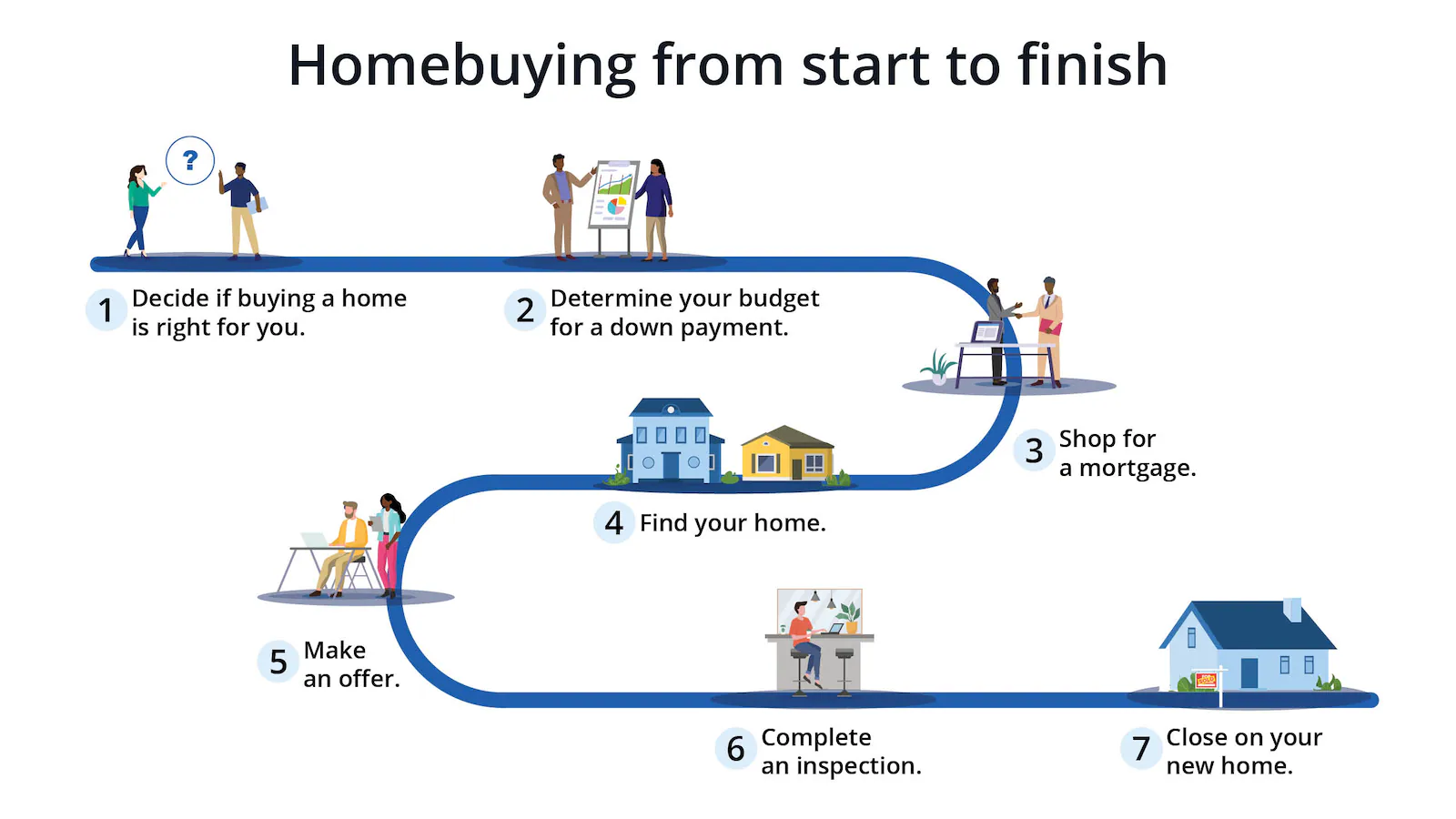
    If you’re planning to buy a home soon, it also helps to understand the overall home buying process before applying for a mortgage.


    What Is a Mortgage and How Does It Work?

    A mortgage is a loan used to purchase a home. You borrow money from a lender and agree to repay it over time, usually with interest.

    The property serves as collateral for the loan. If payments stop for an extended period, the lender may have the legal right to take ownership of the property through foreclosure.

    Most mortgages have repayment terms of 15 or 30 years.

    A 15-year mortgage typically comes with higher monthly payments but lower total interest costs. A 30-year mortgage spreads payments over a longer period, reducing monthly payments while increasing the total interest paid over the life of the loan.

    For example, borrowing $320,000 at a 6.5% interest rate on a 30-year mortgage produces a lower monthly payment than a 15-year mortgage, but the overall interest expense is significantly higher.

    Once the loan is paid in full, the lender’s claim on the property is removed, and you own the home free and clear.


    What Is Included in a Mortgage Payment? (PITI)

    Your monthly mortgage payment is commonly referred to as PITI, which stands for:

    The four PITI components of a mortgage home loan: Principal, Interest, Taxes, and Insurance.

    Principal

    The portion of your payment that reduces your loan balance.

    Interest

    The cost of borrowing money from the lender.

    For example, a $320,000 mortgage at 6.5% generates a principal and interest payment of approximately $2,020 per month.

    Taxes

    Property taxes are often divided into monthly installments and collected with your mortgage payment.

    Insurance

    Homeowners insurance protects the property and is typically required by lenders.

    Example Mortgage Payment

    Home Price: $400,000

    Down Payment: 20%

    Loan Amount: $320,000

    Estimated Monthly Payment

    • Principal & Interest: $2,020
    • Property Taxes: $367
    • Homeowners Insurance: $125

    Total Estimated Payment: $2,512 per month


    Additional Costs in a Mortgage Payment

    Depending on your loan type and financial situation, additional expenses may be included in your monthly payment.
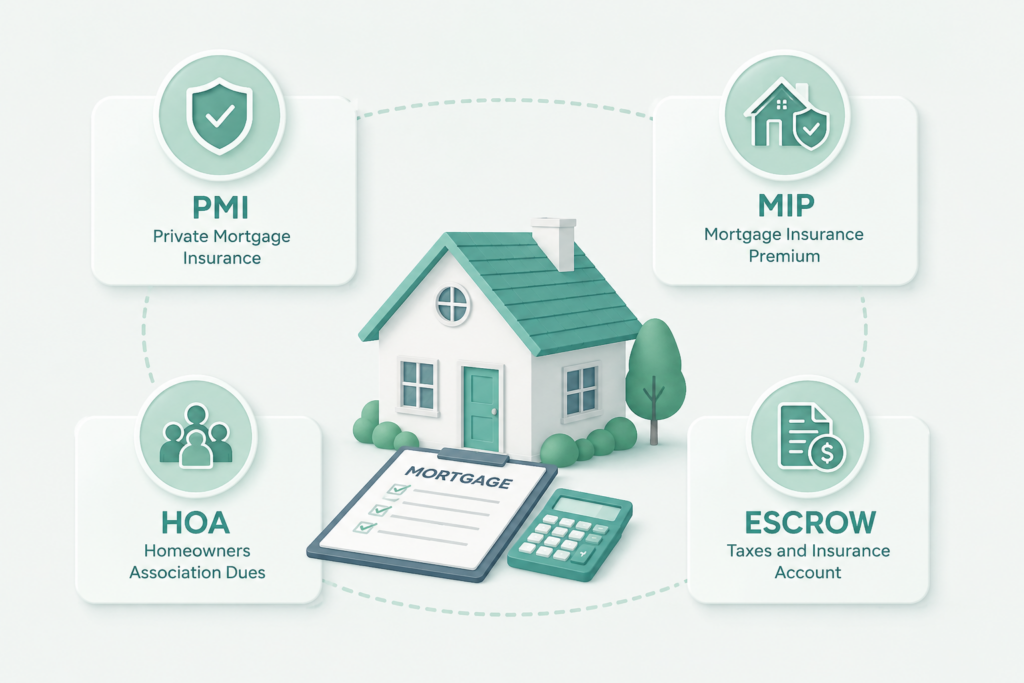
    Illustration of additional mortgage costs including PMI, MIP, HOA fees, and escrow accounts.

    PMI (Private Mortgage Insurance)

    PMI applies to many conventional loans when the down payment is less than 20%.

    It protects the lender, not the borrower.

    In many cases, PMI can be removed once the loan-to-value ratio reaches 80%.

    MIP (Mortgage Insurance Premium)

    MIP applies to FHA loans.

    Unlike PMI, MIP often remains for the life of the loan unless the borrower refinances into another mortgage program.

    HOA Dues

    Some properties located in planned communities or condominiums require monthly homeowners association fees.

    Escrow Account

    Many lenders collect money for taxes and insurance through an escrow account and pay those bills on your behalf when they become due.


    The 5 main types of mortgages
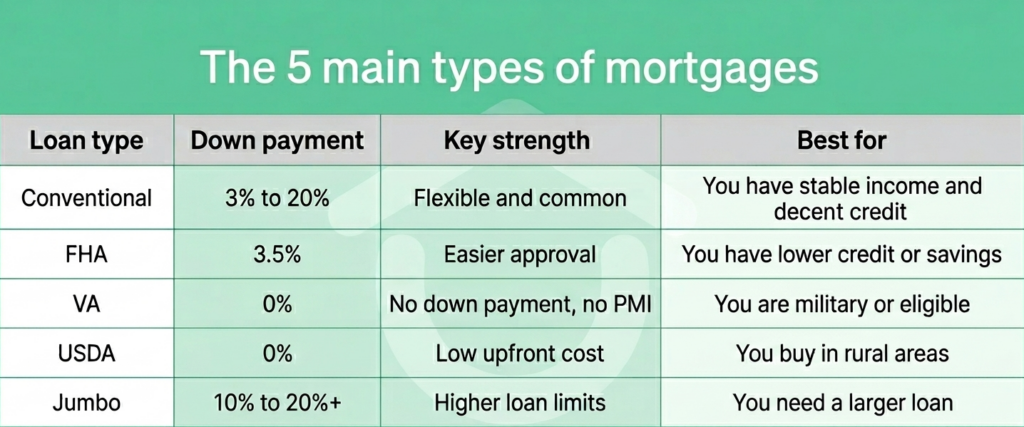
    Mortgage loan type guide comparing down payments and benefits of Conventional, FHA, VA, USDA, and Jumbo loans for first-time buyers.

    Each mortgage program serves a different purpose.

    For example, FHA loans may be easier to qualify for, while VA loans provide significant benefits for eligible service members and veterans.


    Fixed-Rate vs Adjustable-Rate Mortgages

    A fixed-rate mortgage keeps the same interest rate throughout the loan term.

    This means your principal and interest payment remains predictable.

    An adjustable-rate mortgage (ARM) begins with a fixed rate for a specific period and then adjusts periodically based on market conditions.

    For example, a 5/1 ARM maintains the same rate for five years before adjusting annually.

    Fixed-rate mortgages offer stability, while ARMs may provide lower initial rates in exchange for future uncertainty.


    Why Early Mortgage Payments Go Mostly to Interest

    Many first-time buyers are surprised to learn that early mortgage payments contain more interest than principal.

    This happens because interest is calculated based on the remaining loan balance.

    At the beginning of the loan, the balance is at its highest point, so more of each payment goes toward interest.

    As the balance gradually decreases, a larger portion of your payment goes toward reducing principal.

    This repayment structure is known as amortization.


    How to Qualify for a Mortgage

    Understanding how mortgages work is only the first step.

    Lenders also evaluate whether you are likely to repay the loan successfully.

    Credit Score

    Higher credit scores generally improve approval odds and may help borrowers qualify for lower interest rates.

    Debt-to-Income Ratio (DTI)

    DTI compares your monthly debt obligations to your monthly income.

    Lower ratios are typically viewed more favorably by lenders.

    Down Payment

    A larger down payment reduces risk and lowers the amount borrowed.

    Loan-to-Value Ratio (LTV)

    LTV measures the loan amount compared to the home’s value.

    Lower LTV ratios generally indicate lower risk.

    Common Documents Required

    • Proof of income
    • Tax returns
    • Bank statements
    • Government-issued identification

    Mortgage Pre-Qualification vs Pre-Approval

    Pre-qualification provides a basic estimate based on information supplied by the borrower.

    Pre-approval involves documentation review and a credit check.

    Because pre-approval verifies financial information, it generally carries more weight with sellers.

    In competitive housing markets, a pre-approval letter can strengthen your offer and improve your chances of securing a home.


    Mortgage FAQs

    What is a mortgage in simple terms?

    A mortgage is a loan used to purchase a home and repay it over time through monthly payments.

    Is a mortgage the same as a home loan?

    In most cases, the terms “mortgage” and “home loan” are used interchangeably.

    How much mortgage can I afford?

    The amount depends on your income, debts, credit score, down payment, and other financial factors.

    What credit score do I need for a mortgage?

    Requirements vary by lender and loan program, but many conventional mortgages prefer scores of 620 or higher. The Consumer Financial Protection Bureau provides additional resources to help first-time buyers understand mortgage requirements and prepare for the application process.


    Bottom Line

    A mortgage allows you to buy a home now and pay for it over time through structured monthly payments.

    Once you understand how mortgages work, comparing loan options, monthly costs, and qualification requirements becomes much easier.

    For many first-time buyers, the best next step is reviewing their credit profile and obtaining a mortgage pre-approval before beginning their home search. Understanding the role of a loan officer can also help you navigate the mortgage process more confidently.


    Ready to Take the First Step?

    Talk to a licensed loan officer and review your real numbers. Even a short conversation can help you understand what you can realistically afford and which mortgage options may fit your goals.


    Disclaimer

    Wonder Rates NMLS #1518655. Equal Housing Lender. This content is for informational purposes only and does not constitute financial, legal, or tax advice. Mortgage products, interest rates, and underwriting guidelines vary by lender and are subject to change without notice. This is not a commitment to lend. All loan applications are subject to credit and property approval.

  • The 10 Steps to Buying a Home in the US

    The 10 Steps to Buying a Home in the US

    Most buyers know they need a mortgage, but few understand what really happens between getting pre-approved and receiving the keys. Follow Wonder Rates to explore the 10 essential steps every homebuyer should know before closing.

    NMLS #1518655

    What Is the Homebuying Process? The 10 Steps to Buying a Home in the US

    The homebuying process is the series of steps that takes you from deciding to purchase a home to receiving the keys on closing day. While every transaction is unique, most buyers follow the same general path. Along the way, you’ll work with real estate agents, mortgage professionals, appraisers, inspectors, and title companies. Knowing what happens at each stage can help you stay organized and reduce stress throughout the journey.

    buying-a-home-in-the-us.
    What Is the Homebuying Process?

    How Long Does It Take to Buying a Home in the US?

    In the US, the homebuying process usually takes about 30–45 days from the time your offer is accepted until closing and you get the keys.

    But in real life, it can take longer depending on how fast you prepare and find a home. The process is usually split into 2 main phases:

    buying-a-home-in-the-us.webp2
    How Long Does It Take to Buying a Home in the US?

    1. Before making an offer (flexible time)

    This is the preparation stage:

    • You set your budget to see what you can really afford (not just the home price, but also taxes and insurance)
    • You get pre-approved by a lender to show you are qualified to buy
    • You start house hunting, visit homes, and pick the one you like

    2. After your offer is accepted (30–45 days)

    Once the seller accepts your offer, the home goes “under contract” and things move faster:

    • You put down earnest money into an escrow account
    • You do a home inspection to check the condition of the house
    • The lender does an appraisal to check the home’s value
    • Then comes underwriting, where the bank reviews your full loan file
    • Finally, closing: you sign the final papers, the loan is funded, and you get the keys

    What can slow things down?

    A few common delays include:

    • The home appraises lower than the purchase price
    • The bank asks for more documents
    • Paperwork processing takes longer than expected

    The 10 Steps to Buying a Home in the US

    Buying a home may seem complicated, but most transactions follow a predictable process. From determining your budget to signing the final paperwork, each step plays an important role in helping you become a homeowner. Here’s a quick overview of the 10 key steps you’ll typically go through when buying a home in the United States.

    buying-a-home-in-the-us
    The 10 Steps to Buying a Home in the US
    Step What Happens
    1. Determine Your Budget Review your income, savings, debts, and monthly expenses to understand how much home you can comfortably afford.
    2. Get Pre-Approved for a Mortgage A lender reviews your financial information and provides a pre-approval letter showing how much you may be eligible to borrow.
    3. Choose a Real Estate Agent An experienced agent helps you find homes, negotiate offers, and navigate the buying process.
    4. Start House Hunting Search for properties that fit your budget, preferred location, and lifestyle needs.
    5. Submit an Offer Work with your agent to prepare and submit a purchase offer to the seller.
    6. Open Escrow and Deposit Earnest Money Once your offer is accepted, you’ll deposit earnest money and open escrow to begin the transaction.
    7. Complete the Home Inspection A licensed inspector evaluates the property’s condition and identifies potential concerns.
    8. Complete the Appraisal The lender orders an appraisal to confirm the home’s market value.
    9. Go Through Underwriting The lender reviews your finances, documents, and property information before issuing final approval.
    10. Receive Clear to Close and Attend Closing Sign final documents, complete funding, and officially become a homeowner.

    Common Mistakes Homebuyers Should Avoid

    Even when people understand the overall homebuying process, a few common mistakes can create confusion, delays, or unexpected costs. Here are some of the most important ones to watch for:

    Forgetting Property Taxes and Insurance

    • Many buyers calculate affordability using only principal and interest.
    • Always use PITI (Principal, Interest, Taxes, and Insurance) to estimate your true monthly housing cost.

    Confusing Earnest Money with the Down Payment

    • Earnest money is a good-faith deposit submitted after an offer is accepted.
    • The down payment is the larger amount applied toward the home’s purchase price at closing.

    Mixing Up PMI and MIP

    • PMI applies to conventional loans with less than 20% down.
    • MIP applies to FHA loans.
    • These mortgage insurance programs are not interchangeable.

    Getting Inspection and Appraisal Out of Order

    • The buyer typically orders the home inspection first to identify property issues.
    • The lender then orders the appraisal to determine the home’s market value.

    Overlooking the Title Search

    • A title search helps uncover ownership disputes, liens, or legal claims against the property.
    • Skipping this step can lead to serious legal and financial problems.

    Misunderstanding Closing Documents

    • The buyer signs the Note and Mortgage documents.
    • The seller signs the Deed, which officially transfers ownership of the property.

    How to Take Action

    Start by reviewing your finances and understanding how much home you can realistically afford. Before you begin house hunting, obtain a mortgage pre-approval so you know your budget and can make stronger offers when you find the right property.

    It’s also important to work with trusted professionals throughout the process, including a knowledgeable real estate agent and a licensed loan officer. If you’re looking for guidance on mortgage options, loan requirements, and the homebuying process, consider partnering with a reputable mortgage company such as Wonder Rates. Having the right team by your side can help you navigate each step with confidence, avoid costly mistakes, and stay on track toward closing day.

    Keep your financial documents organized, respond quickly to lender requests, and don’t hesitate to ask questions along the way. Taking these steps early can make your homebuying journey smoother, faster, and less stressful.

    Bottom Line

    Buying a home involves multiple steps, but understanding the process can make it much less intimidating. By preparing early and working with the right professionals, you can move from house hunting to homeownership with confidence.

    Want help choosing the right loan? Talk to one of our licensed loan officers at ……

    Disclaimer: Wonder Rates NMLS #1518655 Equal Housing Lender. Information is provided for educational purposes only and is not a commitment to lend. Loan approval, rates, and terms are subject to lender review and applicable underwriting requirements.

  • Your Rate Lock Is a Clock. Here Is What Happens When It Runs Out

    Your Rate Lock Is a Clock. Here Is What Happens When It Runs Out

    Rate lock expiration is something many homebuyers never think about until closing gets delayed.

    Most people think a rate lock works like a receipt. You lock the rate, the rate is yours, and the story is over.

    The part most explainers skip is that a rate lock has an expiration date. If closing gets delayed, that date suddenly matters.

    Why Closing Delays Matter More Than Most Buyers Expect

    A 30-day lock often sounds like plenty of time.

    In reality, your closing timeline depends on several moving parts. An appraisal can come back late. A title issue can take longer than expected to resolve. Underwriting may request additional documentation. New construction timelines can shift.

    None of these automatically creates a problem. The challenge is that a shorter lock leaves less room for unexpected delays.

    That does not mean a 30-day lock is wrong. It means timeline risk is part of the decision.

    Rate Lock Expiration: What Happens When a Lock Expires?

    If your lock expires before closing, one of two things usually happens.

    The first possibility is a lock extension. Your lender agrees to extend the lock period, usually for a fee.

    Extension pricing is not standardized. Costs vary by lender, market conditions, loan type, and extension length. A commonly cited range is approximately 0.125 to 0.25 discount points per extension period, or roughly 0.02% to 0.05% of the loan amount per day, though actual pricing can differ significantly.

    All fee examples in this article are illustrative. Confirm current lock and extension pricing with your Loan Officer.

    The second possibility is that the loan must be repriced using current market conditions. If rates increased during the delay, the new pricing may be less favorable than the original lock.

    Two Buyers, Two Different Risks

    Imagine two buyers purchasing similar homes.

    One pays more upfront for a longer lock. The other chooses a shorter lock with lower upfront cost.

    Neither choice is automatically right or wrong. One buys additional time, while the other accepts more timeline risk.

    A Simple Cost Comparison

    Illustrative example only. Actual pricing varies based on credit profile, LTV, lender guidelines, and market conditions.

    Assumptions

    • Loan amount: $400,000
    • Loan term: 30-year fixed
    • Reference rate: 6.48% from Freddie Mac’s Primary Mortgage Market Survey (PMMS), week ending June 4, 2026
    • Lock options: 30 days, 45 days, and 60 days
    • Illustrative pricing: 30-day lock included in standard pricing, 45-day lock adds approximately 0.125 point, 60-day lock adds approximately 0.25 point.

    The 6.48% figure is a note rate from Freddie Mac PMMS for the week ending June 4, 2026. APR differs because it includes certain fees and financing costs and will be disclosed in your Loan Estimate.

    Lock Period Illustrative Cost
    30 days $0
    45 days ~$500
    60 days ~$1,000

    Now compare that with a delayed closing.

    If a 30-day lock requires an extension, the extension cost alone could fall within a range similar to the additional upfront cost of selecting a longer lock from the outset.

    There is also rate risk. Using the same $400,000 loan example, an increase of 0.25% in the interest rate would raise the principal-and-interest payment by roughly $66 per month. Over five years, that difference adds up to nearly $4,000.

    What this means for you: the important question is not simply, “How much does a longer lock cost?” A more useful question is, “What could it cost if my timeline runs longer than expected?”

    Who Pays the Extension Fee?

    The answer depends on the reason for the delay.

    If closing is delayed because documents arrive late, financial information changes, or additional borrower conditions must be satisfied, the borrower often bears the extension cost.

    If the delay comes from lender-side processing issues or operational errors, the lender may choose to absorb some or all of the expense. Policies vary, and there is no universal rule.

    A Framework for Thinking About Lock Length

    Rather than asking whether a 30-day, 45-day, or 60-day lock is “better,” consider two questions.

    1. How much timeline uncertainty exists?

    A straightforward purchase with clean documentation may have relatively little uncertainty. A new construction property, a complex income profile, or unresolved title issues may create more.

    2. What is the cost of being wrong?

    Compare the additional upfront cost of a longer lock with the potential cost of an extension and the possibility of less favorable pricing if the lock expires.

    It helps you understand the trade-off.

    Three Questions Worth Asking Before You Lock

    1. What are the current extension fees for my loan amount and lock period?
    2. What delays are most common for transactions like mine?
    3. If a delay occurs on the lender’s side, how are extension costs typically handled?

    Your Loan Officer can help you compare the costs and trade-offs using your actual timeline and loan scenario.

    A rate lock sets a deadline as much as it sets a rate. The real decision is not whether rates will move up or down. It is how much timeline risk you are willing to carry into closing. Start by understanding the costs attached to both a longer lock and a potential extension. That is often more useful than trying to predict the market.

    Every transaction has a different timeline and risk profile. If you would like to compare scenarios using your own numbers, speak with a licensed Wonder Rates loan officer at wonderrates.com/contact. No pressure, just clarity.

    DISCLAIMER: Wonder Rates NMLS# 1518655. Equal Housing Lender. This is not a commitment to lend. Rates and terms subject to change. Subject to credit approval. Information is for educational purposes only.

  • 10-Step Home Buying Process for First-Time Buyers

    10-Step Home Buying Process for First-Time Buyers

    Learn the 10-step home buying process for first-time buyers in the US. Understand timelines, key players, and what to expect at every stage.

    NMLS#: 1518655

    Buying your first home in the US can feel confusing when every step sounds new and high-stakes.

    If you’re not sure where to start or how long it takes, you’re not alone. Most first-time buyers go through the same questions. This guide breaks the process into 10 clear steps, so you know what happens, who is involved, and how to move forward with confidence. Understanding the home buying process helps first-time buyers avoid surprises.

    Timeline at a glance (10 steps)

    • Budget planning: 1 to 2 days
    • Pre-approval: 1 to 3 days
    • Find a real estate agent: 1 to 3 days
    • House hunting: 1 to 8 weeks
    • Make an offer: 1 to 3 days
    • Under contract: 1 to 2 days
    • Open escrow, title, and earnest money: 1 to 3 days
    • Home inspection: 3 to 7 days
    • Appraisal (ordered by lender): 3 to 7 days
    • Underwriting to clear to close and closing: 2 to 3 weeks

    Estimated total timeline: 3 to 6 months Contract to closing: 30 to 45 days (according to NAR)

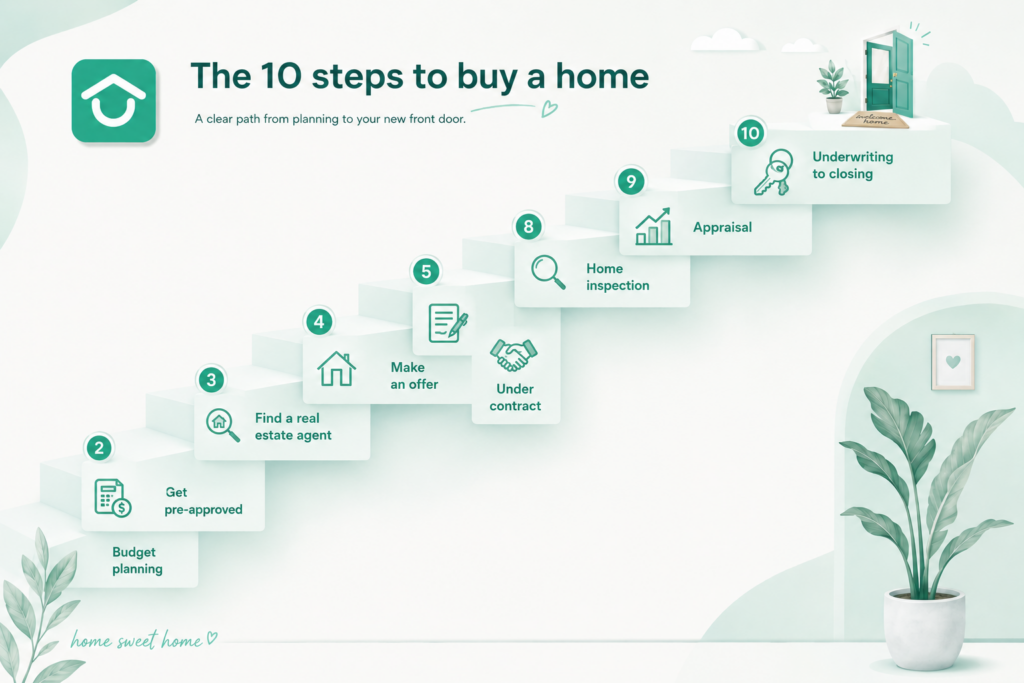
    Home Buying Process: The 10 Steps to Buy a Home

    Infographic showing the 10 steps to buy a home, from budget planning and pre-approval to closing.


    1. Budget planning

    Who: You, lender

    Time: 1 to 2 days

    You start by reviewing your income, debt, and savings. A lender estimates your monthly payment using PITI, which includes principal, interest, taxes, and insurance.

    Tip: Focus on monthly affordability, not just the home price.

    2. Get pre-approved

    Who: You, lender

    Time: 1 to 3 days

    The lender reviews your credit, income, and debt to issue a pre-approval letter. This shows sellers you are serious and ready. If you’re not familiar with mortgage basics, understanding how mortgages work can make the pre-approval process much easier.

    Tip: Avoid big purchases during this stage to keep your profile stable.

    3. Find a real estate agent

    Who: You, real estate agent

    Time: 1 to 3 days

    Your agent helps you find homes, schedule tours, and guide negotiations. They also explain local market conditions.

    Tip: Choose someone responsive and experienced with first-time buyers.

    4. Start house hunting

    Who: You, agent

    Time: 1 to 8 weeks

    You visit homes that match your needs, budget, and location. You compare options before making a decision.

    Tip: Prioritize must-haves over nice-to-haves to avoid decision fatigue.

    House hunting illustration with a for-sale home

    5. Make an offer

    Who: You, agent, seller

    Time: 1 to 3 days

    You submit an offer that includes price and contingencies, such as inspection and financing.

    Tip: A strong but realistic offer can improve your chances in a competitive market.

    6. Under contract

    Who: You, seller, agent

    Time: 1 to 2 days

    Once the seller accepts your offer, both sides agree on terms. The deal moves forward but is not final yet.

    Tip: Read your contract carefully so you understand all deadlines.

    7. Open escrow and title

    Who: You, escrow company, title company

    Time: 1 to 3 days

    A third party holds funds and documents. You deposit earnest money, usually 1% to 3% of the home price. A title search checks for ownership issues.

    Tip: Earnest money can later be applied toward your down payment.

    8. Home inspection

    Who: You, home inspector

    Time: 3 to 7 days

    You hire an inspector to evaluate the home’s condition. This helps you uncover issues before closing.

    Tip: Use inspection results to renegotiate or request repairs if needed.

    9. Appraisal

    Who: Lender, appraiser

    Time: 3 to 7 days

    The lender orders an appraisal to confirm the home’s value. This protects both you and the lender.

    Tip: A low appraisal does not end the deal, but you may need to renegotiate.

    10. Underwriting to closing

    Who: Lender, underwriter, you, seller

    Time: 2 to 3 weeks

    The lender reviews all documents. If approved, you receive clear to close. At closing, you sign the loan documents, and the seller signs the deed.

    Tip: Do not change jobs or open new credit before closing.

    Common mistakes to avoid

    Understanding the home buying process can help you avoid costly mistakes. Many first-time buyers confuse pre-qualification with pre-approval, which can weaken their offer. Others underestimate total costs, including taxes, insurance, and closing fees. Some skip inspection contingencies to win deals, which can lead to costly repairs later. Another common issue is misunderstanding roles. The buyer does not sign the deed at closing, and appraisal is ordered by the lender, not the buyer. Knowing these details helps you avoid delays and surprises.

    How to take action

    The home buying process becomes much easier when you follow a clear checklist. Start by talking to a lender early to understand your budget and loan options. Then, work with a real estate agent who knows your local market. Build a clear checklist for each step and track deadlines carefully.

    Most importantly, take your time to understand each stage. Buying a home is a major decision, and being informed helps you avoid stress and make better choices.

    first-time home buying process and mortgage paperwork

    Bottom line

    While the home buying process may seem complex at first, knowing each step helps you move forward confidently.

    Want to see what you can afford? Talk to a licensed loan officer to explore your options.

    Home Buying Process FAQs

    How long does the home buying process take?

    The process typically takes 3 to 6 months, depending on your financial readiness and local market conditions.

    What is the first step in the home buying process?

    Most buyers start by reviewing their budget and obtaining a mortgage pre-approval.

    Do I need a real estate agent to buy a home?

    While not required, an experienced agent can help navigate negotiations, contracts, and local market conditions.

    DISCLAIMER:

    Wonder Rates NMLS# 1518655. Equal Housing Lender. Information is for educational purposes only and is not a commitment to lend.

  • Same Budget, Two Paths: Buy Down the Rate or Buy Down the House?

    Same Budget, Two Paths: Buy Down the Rate or Buy Down the House?

    Asking the seller to cut the price feels like the obvious win. Most buyers stop there. But the same $12,000 in leverage can work very differently depending on where it goes. Here is the comparison most people never run.

    Why a Lower Purchase Price Is Not Always the Biggest Win

    When you negotiate a price reduction, that savings does not flow one-for-one into your loan. If you are putting 20% down, only 80% of the price cut reduces your loan balance. The other 20% becomes extra down payment.

    On a $400,000 home with 20% down, a $12,000 price cut brings your loan from $320,000 to $310,400, a reduction of $9,600. Your interest rate, applied to that entire remaining balance, stays exactly where it was.

    That is the part most people miss. The rate is not touched. Only a fraction of the principal is.

    What Discount Points Actually Buy

    One discount point equals 1% of your loan amount, paid upfront at closing. In exchange, the lender reduces your interest rate for the life of the loan.

    The exact reduction per point varies by lender and changes with market conditions. Confirm the trade-off on your lender’s current rate sheet before running any math. A commonly referenced rule of thumb is roughly 0.25% per point, but your actual pricing may be higher or lower.

    The Consumer Financial Protection Bureau provides a useful reference: on a $180,000 loan, paying 0.375 points ($675 upfront) reduced the rate enough to save approximately $14 per month. The monthly savings may look small at that scale, but the impact grows on a larger loan.

    Note that the note rate and APR are not the same thing. APR includes certain fees and costs associated with the loan and will be disclosed in your Loan Estimate.

    The One Calculation Most Buyers Skip

    Before comparing a price reduction with a rate buydown, calculate the breakeven point: the month when cumulative monthly savings fully recover the upfront cost.

    Breakeven formula: Breakeven (months) = Upfront cost / Monthly savings

    Assumptions for this example:

    • Loan amount: $320,000
    • Term: 30-year fixed
    • Starting note rate: 6.48% (Freddie Mac PMMS, week ending June 4, 2026)
    • Seller concession applied to points: $12,000, equal to 3.75 points
    • Assumed rate reduction: 0.25% per point (illustrative; your lender’s actual pricing will differ)
    • Reference hold period: 7 years

    At 0.25% reduction per point, 3.75 points brings the rate from 6.48% down to approximately 5.54%.

    Scenario Note Rate Monthly P+I
    No points 6.48% $2,018
    3.75 points 5.54% $1,825

    Monthly savings: $2,018 minus $1,825 = $193

    Breakeven: $12,000 / $193 = 62 months, or about 5.2 years

    Hold the loan past that point and every month after returns $193. Over a 7-year hold, savings beyond breakeven total roughly $4,000.

    (All figures are principal and interest only. Your APR will differ from the note rate and will be disclosed in your Loan Estimate.)

    The Same $12,000, Side by Side

    Price Reduction Rate Buydown
    Seller contribution $12,000 $12,000
    Monthly savings About $60 About $193
    Loan balance reduced Yes No
    Interest rate reduced No Yes
    Breakeven required No Yes, about 5.2 years

    Two strategies, same budget, very different monthly results. Here is why.

    A price reduction shaves $12,000 off the purchase price. With 20% down, only 80% of that flows into your loan balance. Your rate stays at 6.48% (Freddie Mac PMMS, week ending June 4, 2026), applied to a slightly smaller number.

    A rate buydown applies that same $12,000 directly against the percentage the lender charges on your entire balance. Every dollar of the $320,000 loan gets cheaper, for every month you hold it.

    That is the gap between $60 and $193 a month. Not the size of the investment. The target it hits.

    One practical note: seller concession caps vary by loan type and are set by lender guidelines for the current cycle. Confirm the applicable cap for your loan type with your loan officer before structuring an offer.

    Where Lender Credits Fit Into the Picture

    Lender credits work in the opposite direction. Instead of paying more upfront to lower the rate, you accept a higher rate and receive assistance with closing costs.

    This can reduce the cash required at closing, but it typically increases the monthly payment. That is why “no closing costs” does not mean no cost. The expense is shifted from closing day to future interest payments over the life of the loan.

    Whether that trade-off makes sense depends on your expected time in the home, available cash reserves, and future refinance plans.

    Three Questions Worth Asking Your Loan Officer

    The numbers above are illustrations. Your actual breakeven depends on your loan amount, your lender’s pricing per point today, and your realistic hold period.

    Before comparing options, ask your loan officer:

    1. What is the current cost and rate reduction available per discount point on today’s rate sheet?
    2. What is the breakeven period for my specific loan scenario and hold timeline?
    3. What seller concession limits apply to my loan program under current guidelines?

    Your loan officer can model all three scenarios against your real numbers. That comparison is what an informed decision looks like.

    A lower purchase price and a lower interest rate are not the same thing, even when they use the same dollar amount. The rate buydown reaches every dollar of the loan balance. The price cut reaches only a fraction of it. Start by asking your loan officer to run the breakeven on your actual numbers. The most common mistake is choosing based on the headline dollar figure rather than the monthly impact over your real hold period.

    Ready to compare your options? Talk to a licensed Wonder Rates loan officer at https://wonderrates.com/contact/. No pressure, just clarity.

    Wonder Rates NMLS#844897. Equal Housing Lender. This is not a commitment to lend. Rates and terms subject to change. Subject to credit approval. Information is for educational purposes only.

  • What Does a Loan Officer Do? The Role Most Homebuyers Misunderstand

    What Does a Loan Officer Do? The Role Most Homebuyers Misunderstand

    What does a loan officer do during the homebuying process?

    Many first-time buyers assume loan officer simply helps them fill out paperwork. In reality, a loan officer guides your mortgage application from pre-approval through closing and plays a critical role in keeping the process on track.

    NMLS#: 2469443 | Equal Housing Lender | Educational content only

    Nobody tells you this before you buy your first home: the person guiding you through the biggest financial decision of your life gets paid nothing if your loan does not close.

    Not a reduced fee. Not an hourly rate. Nothing.

    Sound familiar? Most people have never thought about that side of the job. Once you do, the loan officer’s role starts to make a lot more sense.

    What Is a Loan Officer?

    A loan officer is a licensed mortgage professional who helps you apply for a home loan. They explain loan programs, review your finances, collect required documents, and help prepare your application.

    For most first-time buyers, a loan officer is the first mortgage professional you talk to. Before you start looking at homes, they help you figure out your budget and which loan fits your situation.

    One thing they do not do: approve the loan. They do not set home prices either, and they cannot promise you will qualify. Those limits matter, and we will come back to them.

    A Loan Officer Is Not a Salesperson

    It is easy to assume their job is to sell you something. The structure of the industry says otherwise.

    Under CFPB Regulation Z (12 CFR 1026.36), a loan officer cannot be paid more for putting you in a higher interest rate. Compensation is tied to the loan amount, not the rate. That removes the most obvious financial reason to push you toward a worse deal.

    There is still a real incentive at work, but it runs in your favor. If the loan does not close, the loan officer earns nothing. That creates a direct stake in getting your file approved and keeping the process moving. 80%~75%$ of pipeline work at any given time may be on files that will not close soon pre-approvals, files prepping months out, or deals still in early stages (industry estimate; figures vary by lender and market)Average pull-through rate on a healthy pipeline (MBA industry benchmark; figures vary by lender and market). Earned on any file that does not fund, regardless of hours put in

    “Do not ask how many loans a loan officer closes per month. Ask what percentage of their pipeline actually funds. That number tells you far more about how they work.”

    Note: the 80% and ~75% figures measure different things. The 80% reflects how much pipeline work is tied to files not yet closing. The ~75% pull-through rate reflects how many files that enter the pipeline eventually fund. A loan officer with a 75% pull-through rate still spends meaningful time on the 25% that do not close and earns nothing on those files.
    That is not a salesperson. That is someone with real skin in the game.

    What Does a Loan Officer Do?

    Most of the work is invisible to you. On a typical file, your loan officer reviews documents, answers questions, coordinates with the processor and underwriter, and tracks the loan from application to closing.

    Their core responsibilities: reviewing your income, assets, debts, and credit; explaining loan programs that fit your situation; collecting required documents; providing legally required disclosures; and resolving anything that could block or delay your closing.

    Their goal is not to approve the loan. Their goal is to move the file forward while staying inside the rules.

    Where a Loan Officer Fits in the Timeline

    • Before you start house hunting. Your loan officer reviews your finances and may issue a pre-approval letter if you qualify. That letter tells sellers your finances have already been reviewed.
    • After your offer is accepted. The pre-approval becomes a full application. Your loan officer walks you through required disclosures and keeps the file moving.
    • During processing. They work with the processor to collect documents and prepare the file. The lender orders the appraisal. You schedule your own home inspection. These are separate steps.
    • During underwriting. The underwriter reviews the file and decides whether the loan meets guidelines. If more documents are needed, your loan officer tracks them down and works to clear issues before they delay closing.
    • Before closing. Once the loan gets final approval, your loan officer coordinates with title and escrow. They stay in the process until the loan funds.

    Loan Officer vs. Processor vs. Underwriter

    Loan OfficerLoan ProcessorUnderwriterYour guide from start to finish. Explains options, reviews finances, answers questions, keeps the file moving.Collects and organizes documents. Verifies information. Prepares the file for underwriting.Reviews the complete file. Evaluates risk against lending guidelines. Makes the approval decision.

    Same team. Three jobs. The loan officer guides, the processor prepares, the underwriter decides.

    What a Loan Officer Cannot Do

    • Guarantee loan approval
    • Promise a specific interest rate
    • Waive or override lender requirements
    • Make the underwriting decision
    • Steer you toward or away from a neighborhood
    • Earn more by putting you in a higher rate (prohibited under CFPB Regulation Z, 12 CFR 1026.36)

    If anyone makes those promises, slow down and ask more questions before you move forward.

    How to Verify a Loan Officer’s NMLS License

    Before you work with any mortgage professional, take 5 minutes to check their license. The Nationwide Multistate Licensing System keeps a free public database at nmlsconsumeraccess.org.

    1. Go to nmlsconsumeraccess.org
    2. Enter the loan officer’s name or NMLS number
    3. Confirm the license is active in your state
    4. Review any public regulatory history

    One search. A few minutes. Worth doing before any serious conversation begins.

    Why the Right Loan Officer Matters

    Buying a home has a lot of moving parts: deadlines, documents, disclosures, lender requirements, and plenty of places where a deal can fall apart.

    A good loan officer cannot control the outcome. What they can do is keep you informed, organized, and prepared at every stage. For most people, that makes the whole process significantly less stressful.

    Now you know what the job actually is. That puts you in a better position to choose the right person for it.

    Thinking about buying a home?

    Speak with a licensed Wonder Rates mortgage professional to understand your financing options and what to expect before you apply. wonderrates.com/contact

    NMLS#: 2469443 | Equal Housing Lender

    This content is for educational purposes only and does not constitute financial, legal, or lending advice. This is not a commitment to lend. Loan approval is subject to credit approval, underwriting review, and program eligibility. Rates, terms, and programs may change without notice. Legal references (CFPB Regulation Z, 12 CFR 1026.36) are included for educational context and do not constitute legal advice.

  • Your Rate Lock Is a Clock, Not a Guarantee: What Happens If It Expires Before Closing?

    Your Rate Lock Is a Clock, Not a Guarantee: What Happens If It Expires Before Closing?

    Your rate lock is a clock, not a guarantee

    Many homebuyers think the hardest part of getting a mortgage is finding a home and locking a rate. Once the rate is locked, it feels like one major uncertainty has been removed from the process.

    In reality, a rate lock is not a permanent guarantee. It comes with an expiration date.

    The goal is not to assume every transaction will be delayed. The goal is to understand the trade-offs before choosing a lock term.

    NMLS #1518655

    What a rate lock actually does

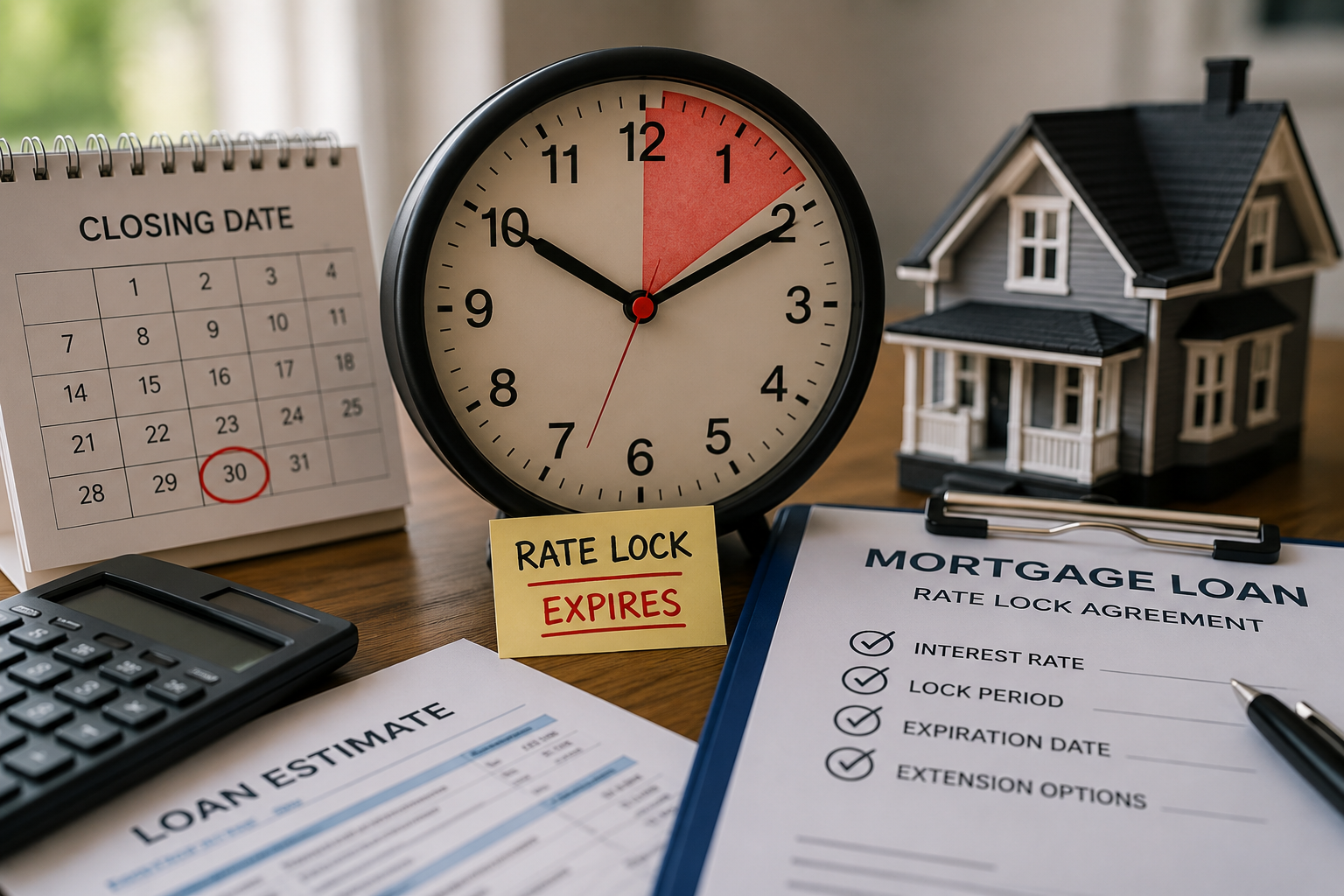
    A rate lock helps protect you from rising interest rates for a set period of time, typically 30, 45, or 60 days.

    If your loan closes before the lock expires, you can generally keep the rate you locked, provided your loan application doesn’t change significantly and you continue to meet the lender’s requirements.

    But if your closing is delayed and the lock expires, you may face one of two outcomes:

    • You pay a fee to extend your rate lock; or
    • Your loan is re-priced using current market rates.

    Which outcome applies depends on your lender’s policies, market conditions, and the reason for the delay.

    rate-lock-is-a-clock
    What a rate lock actually does ?

    Why closings get delayed more often than buyers expect

    Many delays happen for reasons that have little to do with the borrower.

    Appraisal delays

    Appraisal scheduling can become difficult during busy market periods. If the appraisal report arrives later than expected, underwriting timelines may shift.

    Title issues

    Title companies occasionally uncover unresolved liens, ownership questions, or documentation problems that must be addressed before closing.

    Underwriting conditions

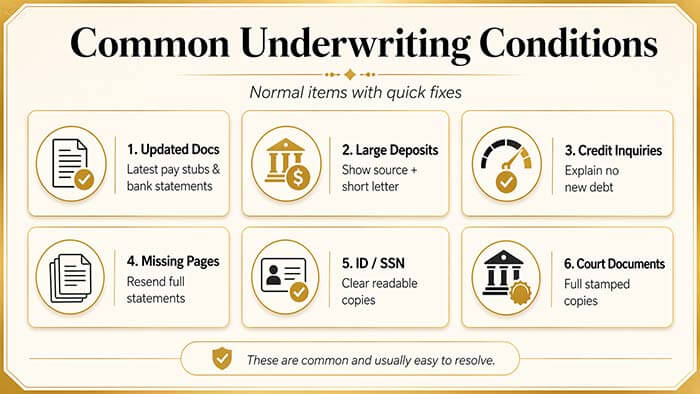
    An underwriter may request additional documentation, updated bank statements, employment verification, or explanations for financial transactions.

    Each request can add days to the timeline.

    rate-lock-is-a-clock
    Underwriting conditions

    New construction timelines

    New construction transactions frequently experience scheduling changes.

    Weather delays, labor shortages, permit approvals, utility connections, and final inspections can all push the closing date beyond the original estimate.

    This is one reason many buyers of newly built homes evaluate longer lock periods from the start.

    rate-lock-is-a-clock.jpg12
    New construction timelines

    Who pays for a lock extension?

    The answer depends on the circumstances.

    There is no universal rule that applies to every lender or every transaction.

    A useful framework is to identify the source of the delay.

    New construction timelines
    Your Rate Lock Is a Clock, Not a Guarantee

    Scenario 1: Borrower-caused delay

    Examples include:

    • Late documentation
    • Changes to employment information
    • Delayed responses to underwriting requests
    • Requests to postpone closing

    In these situations, extension costs are often the borrower’s responsibility.

    Scenario 2: Lender-caused delay

    Examples include:

    • Internal processing delays
    • Underwriting bottlenecks
    • Operational issues within the lender

    Some lenders may absorb certain extension costs when the delay is clearly attributable to their process.

    Scenario 3: Third-party delay

    Examples include:

    • Appraisal scheduling
    • Title work
    • Government recording offices
    • Builder delays

    Responsibility varies by lender policy and transaction structure.

    The important takeaway is that borrowers should understand extension policies before locking rather than after a delay occurs.

    A simple framework: Compare expected cost, not just upfront cost

    Many borrowers focus only on the cheapest lock period available.

    A more useful approach is to compare total expected cost.

    Consider the following illustrative example.

    Option A: 30-day lock

    Assume:

    • Loan amount: $400,000
    • 30-day lock cost: $0
    • Probability of needing a 15-day extension: 30%
    • Extension fee: 0.125 points

    Extension cost:

    • 0.125% × $400,000 = $500

    Expected extension cost:

    • $500 × 30% = $150

    Expected total cost:

    • $0 + $150 = $150

    Option B: 45-day lock

    Assume:

    • Additional upfront lock cost: 0.05 points

    Cost:

    • 0.05% × $400,000 = $200

    Expected total cost:

    • $200

    Option C: 60-day lock

    Assume:

    • Additional upfront lock cost: 0.10 points

    Cost:

    0.10% × $400,000 = $400

    Expected total cost:

    $400

    In this example, the 30-day lock has the lowest expected cost.

    However, if the probability of delay rises significantly, the comparison can change. The lesson is not that one option is always superior. The lesson is that lock duration should be evaluated using both cost and timeline risk.

    Understanding extension fees

    Extension pricing varies significantly by lender and market conditions.

    Illustrative examples often include:

    • Approximately 0.02% to 0.05% of the loan amount per day, or
    • Approximately 0.125 to 0.25 discount points per extension period

    These figures are examples only and may not reflect current lender pricing.

    Actual costs can differ materially based on loan program, lock term, market conditions, and lender policy.

    For that reason, borrowers should request specific extension pricing information before selecting a lock period.

    A Better Conversation Than “What’s the Rate?”

    Instead of asking only, “What is today’s rate?”, consider asking:

    1. How long is the lock period?
    2. What is the extension policy?
    3. How are extension fees calculated?
    4. What delays are most common for this transaction?
    5. Does a new construction property create additional timeline risk?
    6. What are the costs of 30-, 45-, and 60-day lock options?

    These questions often provide more useful information than rate alone.

    Final Thought

    Example rate, fee, APR, and cost figures in this article are hypothetical and provided solely for educational purposes. They do not represent a commitment to lend, a loan approval, or current market pricing.

    Disclaimer: Wonder Rates NMLS #1518655 Equal Housing Lender Rates and terms subject to change. This article is for educational purposes only and should not be considered financial, tax, or legal advice.